Author: admin

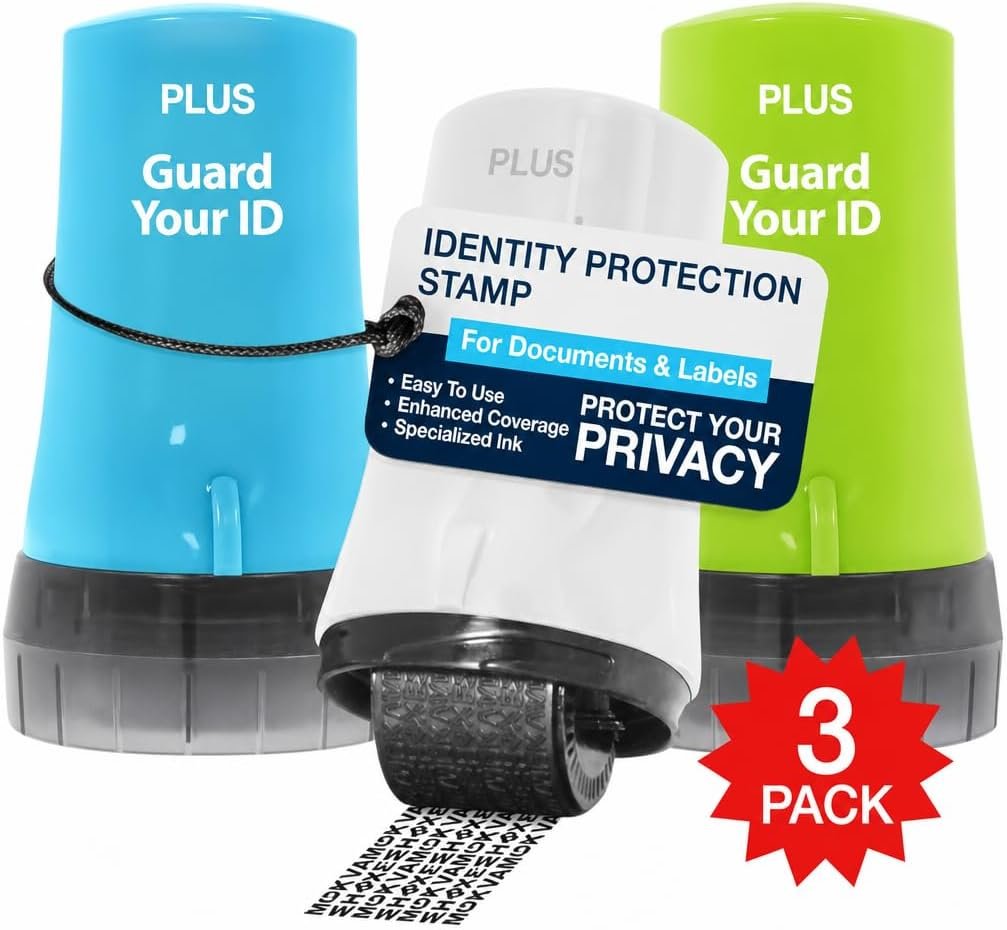
  • Guard Your ID Identity Theft Protection Roller Stamp, 3-Pack for Mail: A Practical Guide to Protecting Personal Information

    Guard Your ID Identity Theft Protection Roller Stamp, 3-Pack for Mail: A Practical Guide to Protecting Personal Information

    Introduction

    Personal information appears in more places than many people realize. Names, addresses, account references, medical information, membership details, customer numbers, and other identifying information can appear on envelopes, statements, bills, shipping labels, forms, and printed documents. Once a piece of paper is no longer needed, simply placing it in the trash may not always be the most thoughtful way to dispose of information that someone else could potentially read.

    One approach to reducing the visibility of information on paper is an identity protection roller stamp. Rather than cutting or shredding every document, a privacy roller uses a pattern of ink to cover printed information. The goal is to make selected text harder to read before a document or envelope is discarded.

    The Guard Your ID Identity Theft Protection Roller Stamp, 3-Pack for Mail is designed around this concept. The three-pack format provides multiple rollers that can potentially be kept in different locations, such as a home office, kitchen, workspace, or near a recycling area. This can make it easier to incorporate information-covering into an everyday paper-disposal routine.

    A privacy roller should not be considered a complete identity-theft prevention system. It is one physical privacy measure among many. Its usefulness depends on how it is applied, what type of information is being covered, the condition of the paper, and whether enough ink is applied to obscure the relevant text.

    This guide explores the product category from a practical and educational perspective. It explains how identity protection roller stamps work, where they may be useful, what types of documents can benefit from them, important limitations to understand, and how they compare with other methods of disposing of sensitive paper information.

    What Is an Identity Protection Roller Stamp?

    An identity protection roller stamp is a handheld privacy tool designed to cover printed information on paper.

    Instead of using a conventional rubber stamp to apply readable text or a decorative pattern, a privacy roller applies an opaque or visually confusing pattern across an area of printed information.

    The pattern is intended to make the original text more difficult to recognize at a glance.

    This can be particularly useful for documents containing information such as:

    • Names
    • Street addresses
    • Account references
    • Customer information
    • Membership details
    • Mailing information
    • Other printed identifiers

    The roller format allows users to move the stamp across a line or block of text rather than manually coloring over each character.

    This makes it suitable for routine paper disposal where speed and convenience matter.

    Key Features

    Privacy-Focused Roller Design

    The primary function of the Guard Your ID roller stamp is privacy-oriented coverage.

    The roller applies a pattern designed to interfere with the readability of printed information. This can help reduce the amount of personal information visibly exposed when paper is discarded.

    The approach is different from simply tearing a document in half.

    A torn envelope may still contain an intact name or address. A privacy roller provides a way to target the printed area directly.

    Three-Piece Pack

    The product is supplied as a 3-pack.

    Multiple rollers can be useful for households or workspaces where paper is discarded in different locations.

    For example, one could be kept near the front door for incoming mail, another in a home office, and another near a general paper-recycling area.

    This can reduce the need to carry a single tool from room to room.

    It can also provide a backup if one roller becomes unavailable.

    Roller Application

    The roller mechanism is designed to make application relatively straightforward.

    Instead of pressing a stationary stamp repeatedly, the user rolls the tool across the area that needs to be covered.

    This can be useful when dealing with addresses printed in a horizontal format on envelopes or labels.

    The rolling motion can also cover multiple lines when the tool is positioned appropriately.

    Intended for Mail and Paper

    The product is particularly relevant to everyday mail.

    Envelopes, shipping labels, statements, and other paper items often display identifying information prominently.

    A privacy roller can provide a simple step between opening mail and disposing of it.

    The tool can also be useful for other printed paper, provided the ink can effectively cover the information and the surface is appropriate for the roller.

    Compact Storage

    A roller stamp is generally much smaller than a paper shredder.

    This allows it to be stored in places where a larger disposal device would be impractical.

    A compact privacy tool can remain near a desk, mail station, or recycling bin and be used whenever necessary.

    How It Can Be Used

    Covering Names and Addresses on Envelopes

    One of the most straightforward uses is covering a name and mailing address after an envelope is no longer needed.

    Rather than leaving the information visible, the user can apply the roller over the relevant area.

    It is important to inspect the result afterward.

    If portions of the name or address remain clearly readable, additional coverage may be appropriate.

    Reducing Exposure of Information on Mail

    Mail can contain more than an address.

    Depending on the sender, an envelope may display a company name, account-related reference, membership information, or other details.

    A privacy roller can be used selectively on areas that the user does not want to remain plainly visible.

    This can be especially useful for households that receive a large amount of printed correspondence.

    Preparing Shipping Labels for Disposal

    Shipping labels often contain names and addresses.

    After a package has been received, the label may remain attached to the packaging.

    Instead of throwing the packaging away with the label fully visible, a privacy roller can be applied to the printed information.

    The user should check the entire label rather than assuming that only the recipient’s name needs to be covered.

    Home Office Paper Disposal

    People who work from home may accumulate printed documents containing personal or business information.

    Examples include:

    • Printed forms
    • Mailing labels
    • Account correspondence
    • Appointment documents
    • Invoices
    • Internal notes
    • Draft paperwork

    A privacy roller can be kept near the home office recycling or disposal area to make privacy protection part of the normal workflow.

    Family Mail Management

    A three-pack can also support multiple household locations.

    One roller might be kept where mail is opened, while another remains in a home office.

    A third can be stored as a spare or placed in another frequently used area.

    The idea is to make privacy protection convenient enough that it becomes a routine rather than an occasional task.

    Creating a Simple Paper Privacy Routine

    A roller stamp becomes more useful when it is incorporated into a consistent disposal routine.

    A simple process might look like this:

    Step 1: Sort the Mail

    Separate documents that can be discarded from documents that need to be kept.

    Step 2: Identify Sensitive Information

    Look for names, addresses, account references, customer numbers, barcodes, labels, and other information that should not remain openly visible.

    Step 3: Apply the Roller

    Move the privacy roller across the relevant areas.

    Make sure the coverage extends beyond the exact characters rather than leaving readable edges.

    Step 4: Inspect the Result

    Look at the paper from different angles and check whether the original information remains recognizable.

    If important information is still visible, additional coverage may be necessary.

    Step 5: Dispose of the Paper Appropriately

    Once the information has been adequately obscured, the paper can be disposed of according to the user’s normal recycling or waste procedures.

    For particularly sensitive documents, a shredder may still be preferable.

    Who It May Be Suitable For

    Households That Receive Regular Mail

    A household receiving bills, statements, catalogs, medical correspondence, shipping labels, and other printed materials may encounter many pieces of paper containing personal information.

    A privacy roller can provide an additional step in the disposal process.

    Home Office Users

    People who work remotely may handle documents containing their own information or business-related material.

    Keeping a roller near a home office can make it easier to address printed information before disposal.

    Small Businesses

    Small businesses may handle paper containing customer names, mailing information, order details, and other business records.

    A privacy roller can be useful for low-risk paper disposal where a full document shredder is not necessary.

    However, businesses should follow their applicable privacy, records-management, and data-protection requirements.

    Students

    Students may receive mail, forms, shipping labels, financial correspondence, or school-related documents containing personal information.

    A small privacy tool can be stored in a dorm room, apartment, or home study area.

    People Who Prefer Compact Privacy Tools

    Not everyone wants to operate a shredder for every envelope.

    A compact roller can be useful when the goal is to quickly obscure a limited amount of information.

    Important Things to Consider

    A Privacy Roller Does Not Guarantee Identity Theft Protection

    The phrase “identity theft protection” should be understood carefully.

    A roller stamp can help obscure printed information on discarded paper, but it cannot prevent identity theft by itself.

    Identity theft can involve many different sources, including compromised online accounts, phishing, stolen credentials, data breaches, fraudulent transactions, and other forms of information exposure.

    Using a privacy roller is therefore best viewed as one layer of physical information management.

    Coverage Matters

    The effectiveness of a privacy roller depends heavily on how thoroughly the information is covered.

    If only part of an address is obscured, the remaining characters may still reveal useful information.

    Users should pay attention to:

    • The beginning of names
    • Street numbers
    • Apartment numbers
    • ZIP codes
    • Account references
    • Barcodes
    • Other identifying text

    A quick pass may not always provide enough coverage.

    Some Information May Require Shredding

    A roller stamp is not necessarily appropriate for every document.

    Highly sensitive paperwork may be better destroyed using a cross-cut or micro-cut shredder, particularly when the entire document contains sensitive information.

    Examples may include certain financial records, tax documents, legal paperwork, or documents containing extensive personal information.

    The appropriate disposal method depends on the sensitivity of the material.

    Barcodes Can Contain Information

    Users should not assume that covering the visible name and address is always sufficient.

    Some mail and labels contain barcodes or other machine-readable elements.

    If the goal is to prevent information from remaining accessible, users should consider whether other identifying information remains on the paper.

    Different Paper Surfaces May Behave Differently

    Ink application can vary depending on the paper.

    Glossy surfaces, coated labels, thermal paper, and other specialty materials may behave differently from ordinary envelopes or office paper.

    The user should check the result after applying the roller rather than assuming every surface will provide identical coverage.

    Ink Coverage Can Vary

    Like other ink-based products, a roller stamp can eventually require replacement or replenishment depending on its construction.

    Users should follow the manufacturer’s guidance for maintenance and replacement.

    If the printed pattern becomes faint, the privacy effect may be reduced.

    Test Before Disposing of Important Documents

    If someone is using a privacy roller for the first time, it can be sensible to test it on ordinary unwanted paper.

    This allows the user to understand how much pressure and how many passes are needed to create adequate coverage.

    Testing also helps identify whether the ink behaves as expected on a particular paper surface.

    Privacy Roller vs. Shredding

    Shredding is one of the most established ways to destroy paper containing sensitive information.

    A cross-cut or micro-cut shredder physically breaks paper into small pieces, making reconstruction substantially more difficult than simply tearing a page.

    A privacy roller works differently.

    It does not destroy the paper. Instead, it obscures selected printed information.

    This can make a roller more convenient for everyday mail where only an address or other limited section needs to be concealed.

    For highly sensitive documents, shredding may be more appropriate.

    The two methods can also be used together. For example, a household could use a roller for ordinary envelopes and use a shredder for documents containing extensive financial or personal information.

    Privacy Roller vs. Permanent Marker

    A permanent marker can be used to manually cover information.

    This method is inexpensive and widely available, but it can be slower and less uniform.

    A roller provides a dedicated application mechanism designed specifically for repeated privacy coverage.

    A marker may still be useful as a backup, particularly when the information appears in an unusual shape or location that is difficult to cover with a roller.

    Privacy Roller vs. Tearing Paper

    Tearing an envelope or document into a few pieces does not necessarily make the information unreadable.

    A person’s name and address may remain intact on one piece.

    A privacy roller targets the printed information directly.

    However, tearing and shredding can be combined with obscuring techniques when appropriate.

    Privacy Roller vs. Digital Document Management

    Reducing paper is another way to reduce physical exposure.

    Electronic statements, digital receipts, and online account management can reduce the number of documents entering a household.

    However, going paperless does not eliminate privacy concerns. Digital information has its own risks, including account security, phishing, malware, and unauthorized access.

    Physical and digital privacy practices should therefore be considered separately.

    Practical Mail Privacy Tips

    A privacy roller works best as part of a broader approach to handling mail.

    Remove Labels From Packages

    Before recycling or discarding packaging, inspect all sides for labels and printed information.

    Avoid Leaving Mail in Public Areas

    Mail containing personal information should not be left unattended in shared spaces.

    Keep Important Documents Secure

    Documents that need to be retained should be stored in an appropriate location rather than simply placed in an open recycling container.

    Consider Digital Statements

    Where appropriate, switching to electronic statements can reduce the amount of paper containing personal information.

    Protect Digital Accounts

    Physical document security is only one part of personal information management. Strong passwords, multifactor authentication, and careful handling of suspicious messages can help address digital risks.

    Use Appropriate Destruction for Highly Sensitive Records

    Some records deserve more thorough destruction than a roller stamp alone can provide.

    A document shredder may be appropriate for highly sensitive paperwork.

    Using the Three-Pack Strategically

    The three-pack configuration offers an opportunity to establish multiple privacy stations.

    For example:

    Mail area: Keep one roller where incoming mail is opened and sorted.

    Home office: Keep another near a desk or printer.

    Storage or recycling area: Place the third where discarded paper is prepared for recycling.

    This approach can reduce the inconvenience of searching for the tool each time a document needs to be processed.

    The same concept can work in a small business. One roller can remain at reception, another in an office, and another near a records-management area, provided the organization has appropriate procedures for sensitive information.

    Frequently Asked Questions

    What is the Guard Your ID Identity Theft Protection Roller Stamp?

    It is a privacy-oriented roller stamp designed to obscure printed information on paper. The product is supplied as a three-pack and is intended for uses such as mail and other paper containing identifying information.

    What type of information can a privacy roller cover?

    It can be used to obscure printed information such as names, addresses, account references, labels, and other text appearing on suitable paper surfaces.

    Does the roller completely remove personal information?

    No. A privacy roller does not physically remove the information from the paper. It applies an ink pattern intended to make the underlying text harder to read.

    Is a privacy roller the same as a paper shredder?

    No. A roller obscures information while a shredder physically destroys the paper into smaller pieces. Each method has different applications.

    Can a privacy roller replace shredding?

    Not in every situation. Highly sensitive documents may warrant shredding, particularly when the entire document contains substantial personal or financial information.

    Can it be used on envelopes?

    A privacy roller is particularly suited to mail-related applications, including covering names and addresses on envelopes, provided the surface is appropriate for the ink.

    Can it be used on shipping labels?

    It may be useful for covering identifying information on suitable shipping labels. Users should inspect the entire label and consider whether barcodes or other information also need to be addressed.

    Why is the product sold as a three-pack?

    Multiple rollers can be stored in different locations, such as a mail area, home office, and recycling station. The three-pack can also provide an extra unit for another household member or workspace.

    Is the roller useful for businesses?

    It can be useful for routine paper handling, but businesses should also follow applicable records-management and privacy requirements. Sensitive records may require more comprehensive destruction procedures.

    Does the roller protect against all forms of identity theft?

    No. It addresses one physical aspect of information disposal. Identity theft can also occur through online accounts, phishing, data breaches, stolen credentials, and other channels.

    How can I tell whether enough information has been covered?

    Inspect the document after rolling over it. Important identifying text should not remain easily readable. If portions remain clear, additional coverage or another disposal method may be appropriate.

    Can the roller be used on glossy paper?

    The result can vary depending on the surface. Glossy, coated, thermal, and specialty papers may behave differently from ordinary paper. Testing the roller on an unwanted piece of similar material can help determine how well it covers the surface.

    Should barcodes be covered too?

    If a barcode contains identifying or tracking information that the user wants to keep from being readily accessible, it should be considered as part of the overall disposal process. The appropriate approach depends on the document and the information it contains.

    Is a privacy roller useful for everyday mail?

    It can be useful for routine mail disposal where the goal is to obscure visible personal information before the paper is discarded.

    Can children use a privacy roller?

    Because the product contains ink and is intended for privacy-related document handling, adult guidance may be appropriate for younger children. It should also be stored according to the manufacturer’s recommendations.

    Conclusion

    The Guard Your ID Identity Theft Protection Roller Stamp, 3-Pack for Mail is designed to address a simple but common household problem: printed personal information that remains visible on paper after the document is no longer needed.

    Its roller format provides a convenient way to obscure names, addresses, labels, and other selected information without requiring the entire piece of paper to be destroyed. The three-pack can also make it practical to maintain privacy tools in several locations around a home or workspace.

    The key point is to understand what a privacy roller can and cannot do. It is a physical information-disposal aid, not a complete identity-theft prevention solution. Its effectiveness depends on adequate coverage, appropriate paper surfaces, and careful attention to other identifying information such as barcodes and account references.

    For routine mail, shipping labels, household paperwork, and other documents where limited areas of information need to be obscured, a privacy roller can be a convenient addition to a paper-management routine. For highly sensitive records, shredding or another appropriate destruction method may provide a more thorough solution.

    Used alongside sensible digital-security practices, careful document storage, and appropriate disposal methods, a privacy roller can become one small part of a broader approach to protecting personal information.
    You can check more details on Amazon here.

  • VIBELITE Magnetic Pickup Tool & 6-in-1 Multitool Pen: A Practical Guide to Everyday Utility

    VIBELITE Magnetic Pickup Tool & 6-in-1 Multitool Pen: A Practical Guide to Everyday Utility

    Introduction

    Small tools can be surprisingly useful when they combine several practical functions in a compact form. A magnetic pickup tool, for example, can make it easier to retrieve small ferrous metal objects from awkward locations, while a multitool can provide several basic functions without requiring a full toolbox.

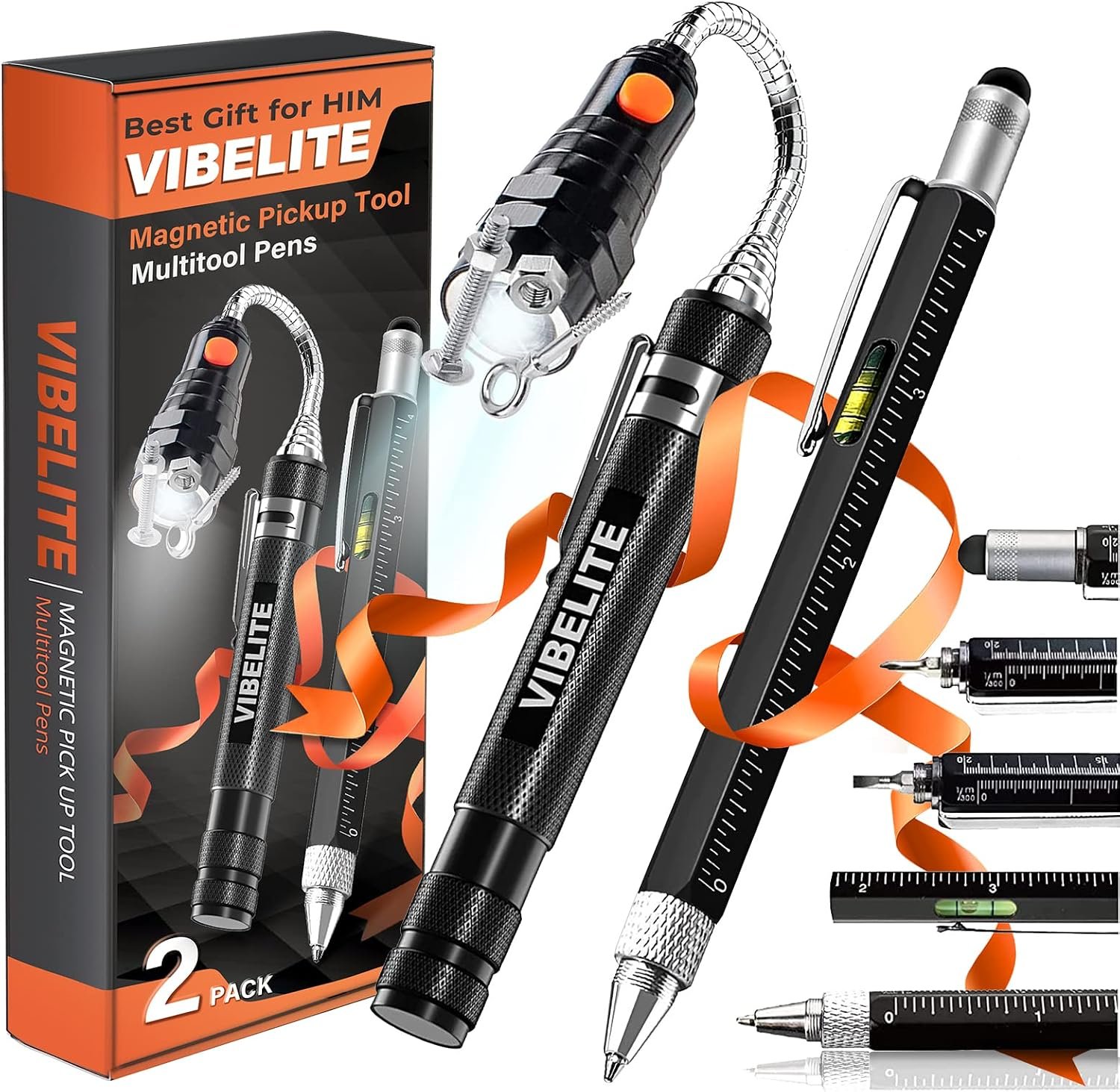
    The VIBELITE Magnetic Pickup Tool & 6 in 1 Multitool Pen, 2 Pack brings these ideas together in a pen-style format. Instead of carrying several separate small tools, the concept is to keep multiple everyday functions in one compact item. The two-pack format also makes it possible to keep one tool in one location and another somewhere else, such as a desk, workshop, vehicle, or toolbox.

    A tool of this type can be useful for routine tasks involving small objects, light maintenance, organization, hobby projects, and general household activities. Its magnetic pickup function is particularly relevant when a small metal object falls into a difficult-to-reach location. Rather than moving furniture or reaching into a narrow space with your fingers, a magnetic pickup tool can provide an alternative way to retrieve suitable ferrous items.

    At the same time, a compact multitool should be viewed according to the type of work it is designed to support. A pen-sized tool is intended for convenience and portability, not for replacing a complete set of professional tools. The individual functions can be helpful for quick tasks, but larger or more demanding jobs may require dedicated equipment.

    This guide explores the VIBELITE Magnetic Pickup Tool and 6-in-1 Multitool Pen from an informational perspective. It covers its general design, possible uses, practical advantages, limitations, suitable users, comparisons with other categories of compact tools, and considerations before incorporating one into a toolbox or everyday-carry setup.

    What Is a Magnetic Pickup Tool?

    A magnetic pickup tool is a simple device that uses magnetic attraction to retrieve compatible metal objects.

    The principle is straightforward. Certain metals, particularly iron and many steel objects, respond strongly to magnets. If a compatible object falls behind a cabinet, under a workbench, inside a narrow gap, or into another difficult-to-access area, a magnetic pickup tool can sometimes reach it without requiring the user to place their hand directly into the space.

    This can be useful for objects such as:

    • Small screws
    • Nuts
    • Washers
    • Bolts
    • Metal clips
    • Small tools or components
    • Other suitable ferrous objects

    However, magnets do not attract every type of metal. Materials such as aluminum, copper, brass, and many forms of stainless steel may not respond strongly to an ordinary permanent magnet.

    That distinction is important because a magnetic pickup tool is not a universal retrieval device. Its usefulness depends on the material, size, shape, and accessibility of the object being retrieved.

    Key Features

    Magnetic Pickup Function

    The magnetic pickup function is one of the defining features of the VIBELITE tool.

    A magnetic tip can provide a convenient way to retrieve small compatible metal objects. This can be particularly useful during maintenance, assembly, repair, crafting, or workshop activities where small fasteners can occasionally fall into inconvenient places.

    For example, imagine a small steel screw dropping behind a workbench. Reaching for it manually may be awkward, particularly if the gap is narrow. A magnetic pickup tool can potentially extend the user’s reach while allowing the magnet to attract the screw.

    This type of tool can also help when organizing loose metal components. Instead of picking up every small screw individually, a magnetic tool can sometimes gather several compatible pieces.

    Pen-Style Format

    The pen-style form factor is designed around portability.

    Large pickup tools can be useful in workshops, but they are not always convenient to carry around the house or workplace. A compact multitool pen can be stored in a drawer, toolbox, desk organizer, glove compartment, or workshop area.

    The small format also makes it easier to have a tool available when a full toolbox is not nearby.

    Portability is particularly useful for people who frequently move between work areas.

    Six-in-One Multitool Concept

    The product is presented as a 6-in-1 multitool pen, meaning several functions are incorporated into a single compact tool.

    The exact functions and configuration should be checked against the current manufacturer or Amazon listing before use, as product configurations can change over time.

    The broader benefit of a multitool format is convenience. Instead of searching for several separate small tools, the user has a collection of basic functions available in one pen-style device.

    This makes the concept especially relevant to light-duty tasks and quick adjustments.

    Two-Pack Configuration

    The product is offered as a two-pack.

    Having two compact tools can be practical for people who work in multiple locations. One could remain in a home toolbox while another is kept in a vehicle, workshop, office, or another frequently used location.

    A two-pack can also be useful when multiple people in the same household or workspace need access to a small pickup tool.

    The value of having two units ultimately depends on how frequently the tools are used and whether separate storage locations are useful.

    Compact Storage

    A compact multitool does not require much storage space.

    A full toolbox can become inconvenient when the task only requires a simple adjustment or the retrieval of a small metal component. A pen-sized tool can occupy considerably less room than several individual tools.

    This makes it suitable for small drawers, tool organizers, backpacks, workstations, and other spaces where storage capacity is limited.

    How It Can Be Used

    Retrieving Fallen Screws

    One of the most straightforward applications is retrieving a dropped screw.

    Small screws can easily roll underneath furniture or machinery. If the screw is made from a magnetic material, the pickup tool can potentially help locate and retrieve it.

    The process is simple: position the magnetic end near the object and allow magnetic attraction to do the work.

    It is important to remember that the magnet’s effectiveness depends on the material and shape of the object.

    Collecting Small Metal Parts

    During a repair or assembly project, several compatible metal components may be scattered across a work surface.

    A magnetic pickup tool can help gather these pieces.

    This can be particularly convenient when dealing with small screws, washers, or other ferrous components that are difficult to pick up individually.

    However, users should avoid assuming that every metal component will respond to the magnet.

    Reaching Into Narrow Spaces

    A narrow gap can make it difficult to retrieve a small object with your fingers.

    A pickup tool can provide additional reach, depending on the design and dimensions of the tool.

    Potential locations include:

    • Behind furniture
    • Under workbenches
    • Around workshop equipment
    • Inside storage areas
    • Between certain non-electrical mechanical components

    Care is necessary when working around electrical equipment, moving machinery, hot surfaces, or components that could create a safety hazard.

    Light Household Maintenance

    The multitool concept can be useful for small household tasks where a dedicated full-size tool would be unnecessary.

    For example, a compact tool may be convenient for making minor adjustments, handling small fasteners, or addressing a simple maintenance task.

    The important distinction is between light-duty convenience and heavy-duty work.

    If a fastener is extremely tight or requires significant torque, a full-size screwdriver, wrench, pliers, or other dedicated tool is generally more appropriate.

    Workshop Organization

    Small tools are often useful for maintaining an organized workspace.

    A magnetic pickup tool can help collect loose metal pieces after a project. This can reduce the amount of time spent searching for individual components.

    It can also be kept near an assembly station so that a retrieval tool is immediately available when needed.

    Hobby and Craft Projects

    Hobbyists frequently work with small components.

    Model building, electronics-related projects, mechanical hobbies, DIY activities, and other crafts can involve screws, pins, clips, and other small pieces.

    A magnetic pickup function may be useful when the relevant component is compatible with the magnet.

    The multitool functions can also provide occasional convenience when making minor adjustments.

    However, sensitive electronics require particular caution. Magnets and electronic components should be handled according to the manufacturer’s recommendations for the equipment involved.

    Automotive and Garage Tasks

    A compact magnetic pickup tool can have applications in a garage environment.

    Small metal fasteners can occasionally fall into awkward locations during maintenance. A magnetic retrieval tool can potentially assist with recovering suitable components.

    It should not be used near moving mechanical parts while machinery is operating.

    Similarly, the tool should not be treated as a substitute for proper automotive equipment or safe maintenance procedures.

    Who It May Be Suitable For

    DIY Enthusiasts

    People who frequently perform small household projects may appreciate having a compact multitool available.

    DIY work often involves small adjustments where a full toolbox is unnecessary.

    A pen-style tool can remain nearby without taking up much space.

    Workshop Users

    A workshop environment can benefit from small retrieval tools because screws and other components can easily become scattered.

    Keeping a magnetic pickup tool near the workbench can provide a convenient solution for suitable metal objects.

    Homeowners

    Homeowners may find compact tools useful for occasional maintenance.

    A small tool can be stored with household repair supplies and brought out when a minor task arises.

    It is particularly relevant for situations where convenience matters more than maximum tool strength.

    Hobbyists

    Model builders, crafters, makers, and other hobbyists often work with small parts.

    A compact pickup tool can complement their existing equipment, particularly when small ferrous components are involved.

    People Who Prefer Compact Tool Storage

    Not everyone wants a large toolbox filled with specialized equipment.

    A multitool pen offers a different approach: keeping several basic functions in a small format.

    This can be useful for people who value portability and minimal storage requirements.

    Office and General Utility Users

    Some people may keep compact tools in a desk drawer for occasional tasks.

    The usefulness in an office setting depends on the specific functions included in the multitool and the types of tasks encountered.

    Important Things to Consider

    A Magnet Does Not Attract Every Metal

    This is one of the most important limitations to understand.

    A magnetic pickup tool works through magnetic attraction, not simply because an object is made from metal.

    Iron and many common steel objects can be attracted, while materials such as copper, brass, and aluminum generally are not.

    If a dropped object does not respond to the magnet, another retrieval method may be necessary.

    Compact Tools Have Physical Limits

    The pen-sized format provides portability, but it also places limits on strength and leverage.

    A compact multitool is not necessarily suitable for loosening heavily tightened fasteners, applying substantial torque, or performing demanding mechanical work.

    For those situations, a dedicated full-size tool is more appropriate.

    Magnet Strength Can Vary With Distance

    Magnetic attraction decreases as the distance between the magnet and the object increases.

    A small object that responds strongly when the magnet is close may be much harder to retrieve from a larger distance.

    The shape and mass of the object also matter.

    Be Careful Around Sensitive Equipment

    Magnets should be used thoughtfully around equipment that may be affected by magnetic fields.

    Users should follow the manufacturer’s instructions for nearby electronics, magnetic storage media, medical devices, precision instruments, and other sensitive equipment.

    When there is uncertainty, keep the magnet away from the device.

    Avoid Moving Machinery

    A magnetic pickup tool should not be used near moving machinery unless the equipment is fully shut down and the work area is safe.

    The convenience of a retrieval tool does not eliminate the hazards associated with rotating components, pinch points, sharp edges, or powered equipment.

    Do Not Use It as a Safety Tool

    A compact multitool is designed for practical utility, not for replacing proper safety equipment.

    For maintenance work, users should still follow appropriate procedures, wear suitable protective equipment, and make sure machinery is safely isolated when necessary.

    Check the Specific Tool Functions

    The term “6-in-1 multitool” describes the general multifunction design, but users should verify the exact functions included in the current product configuration.

    This is particularly important if a particular function is needed for a specific task.

    Keep Small Tools Away From Young Children

    Compact multitools can contain small components or tool edges that are not appropriate for unsupervised children.

    They should be stored securely when not in use.

    Magnetic Pickup Tools Compared With Other Retrieval Methods

    Magnetic Pickup Tool vs. Manual Retrieval

    Picking up a small object by hand is the simplest option when it is easy to reach.

    A magnetic tool becomes more useful when the object is small, magnetic, and located somewhere difficult to access.

    The advantage is primarily convenience and reach rather than universal functionality.

    Magnetic Pickup Tool vs. Flexible Grabber

    Flexible grabber tools can retrieve a wider variety of objects because they do not rely on magnetic attraction.

    They may be more appropriate for non-metallic items.

    A magnetic pickup tool, however, can be particularly simple for compatible metal objects because the user does not need to physically grip the object.

    Magnetic Pickup Tool vs. Full-Size Pickup Rod

    Full-size magnetic pickup rods can provide greater reach and may be designed for heavier workshop use.

    A pen-style tool emphasizes portability.

    The appropriate choice depends on whether reach and retrieval capacity or compact storage is more important.

    Multitool Pen vs. Individual Tools

    Convenience

    The main reason people use multitools is convenience.

    Several functions can be carried in one compact device.

    This can reduce the number of individual tools needed for small tasks.

    Strength and Ergonomics

    Individual full-size tools generally provide more room for gripping and applying force.

    A multitool pen is designed around compactness, so it may not provide the same leverage.

    For routine light-duty tasks, that distinction may not matter. For demanding jobs, it can become significant.

    Storage

    A multitool pen takes little space.

    Individual tools can require considerably more storage but may provide better performance for specialized jobs.

    This is essentially a trade-off between portability and specialization.

    Practical Ways to Organize a Two-Pack

    Because the product comes as a two-pack, users can assign each tool to a different location.

    One possible setup is:

    Home tool drawer: Keep one available for household maintenance.

    Workshop or garage: Keep the second near the workbench.

    Another approach is to keep one with a hobby kit and another in a vehicle emergency or maintenance kit.

    The goal is not to carry both everywhere. The two-pack can simply make it easier to have a compact tool available where it is most likely to be needed.

    Tips for Using a Magnetic Pickup Tool Effectively

    Start by identifying whether the object is likely to be magnetic.

    If the object is known to be steel or iron, the pickup tool may be suitable.

    Move the magnetic tip gradually toward the object rather than expecting it to attract an item from a long distance.

    For small objects in cluttered areas, move slowly and methodically.

    If the object is not responding, do not keep assuming that the magnet is too weak. The material itself may not be magnetic.

    When retrieving components from machinery or equipment, make sure the equipment is powered down and safe to access.

    After use, wipe the tool if necessary and store it in a location where it will not interfere with other equipment.

    Maintenance and Storage

    A compact multitool generally benefits from simple care.

    Keep the tool clean and dry unless the manufacturer’s instructions specify otherwise.

    Avoid exposing it unnecessarily to moisture, corrosive substances, extreme heat, or harsh chemicals.

    The individual tool functions should be operated according to their intended purpose rather than being forced beyond their design limits.

    When storing the tool, consider nearby magnetic-sensitive items.

    Keeping a magnet away from equipment that could potentially be affected by magnetic fields is a sensible precaution.

    Frequently Asked Questions

    What is the VIBELITE Magnetic Pickup Tool?

    It is a compact tool that combines a magnetic pickup function with a multifunction pen-style design. The product is sold as a two-pack and is intended for everyday utility and light-duty tasks.

    What can a magnetic pickup tool pick up?

    It can pick up suitable ferrous metal objects that respond to magnetic attraction. Common examples may include certain screws, washers, nuts, bolts, and small steel components.

    Will the magnet pick up aluminum?

    Generally, ordinary permanent magnets do not strongly attract aluminum. Magnetic pickup tools are primarily useful for compatible ferrous materials.

    Can this type of tool replace a toolbox?

    A compact multitool can supplement a toolbox, but it should not generally be considered a complete replacement for dedicated tools. Full-size tools are usually more suitable for demanding tasks requiring substantial leverage or torque.

    What are common uses for a magnetic pickup tool?

    Common uses include retrieving dropped screws, collecting small ferrous components, reaching into narrow spaces, and assisting with light workshop or household tasks.

    Why would someone want a two-pack?

    Two tools can be kept in separate locations, such as a home toolbox and a garage, or shared between different users. The usefulness of the two-pack depends on individual needs.

    Is a multitool pen suitable for professional work?

    It may be useful for quick, light-duty tasks, but professional users should select tools based on the specific requirements of their work. A compact pen-style multitool has physical limitations compared with dedicated professional equipment.

    Can a magnetic pickup tool be used around electronics?

    Care is recommended because some equipment can be sensitive to magnetic fields. Users should check the manufacturer’s guidance for the specific electronic device and keep magnets away when there is uncertainty.

    Can it be used around machinery?

    Only when the machinery is safely shut down and the area is appropriate for access. A magnetic pickup tool should not be used near operating machinery where it could create a safety hazard.

    Does a magnet attract every metal object?

    No. Magnetic attraction depends on the material. Iron and many steels are commonly magnetic, while metals such as copper, brass, and aluminum generally are not attracted by ordinary magnets.

    Is a compact multitool useful for DIY projects?

    It can be useful for small DIY tasks, adjustments, and retrieving compatible metal components. More demanding projects may require dedicated full-size tools.

    How should a multitool pen be stored?

    It should be kept clean and dry and stored securely. Because it contains a magnet, it is sensible to consider nearby magnetic-sensitive devices and equipment.

    Is this type of tool suitable for children?

    A multitool containing functional tool components and a magnet should be treated as an adult utility tool unless the manufacturer specifically indicates otherwise. It should be stored where young children cannot access it unsupervised.

    Conclusion

    The VIBELITE Magnetic Pickup Tool & 6-in-1 Multitool Pen, 2 Pack combines two useful ideas in a compact format: magnetic retrieval and everyday multitool functionality.

    Its magnetic pickup capability can be helpful when small ferrous objects fall into difficult-to-reach spaces, while the multitool format provides several basic functions without requiring a collection of separate tools for every minor task.

    The pen-style design emphasizes portability and convenient storage. A two-pack can also make sense for households or workspaces where having a tool in more than one location is useful.

    At the same time, the compact format comes with practical limitations. A magnetic pickup tool cannot retrieve every type of metal, and a small multitool should not be expected to deliver the leverage or strength of dedicated full-size equipment. Users should also exercise caution around electronics, machinery, magnetic-sensitive equipment, and any situation where a tool could create a safety hazard.

    For DIY enthusiasts, hobbyists, homeowners, workshop users, and people who prefer keeping compact tools nearby, this category can provide a convenient addition to an existing collection of equipment. Its greatest value is not that it replaces every other tool, but that it puts several simple functions into a small and accessible format.

    Used appropriately, a compact magnetic pickup and multitool can be a practical helper for the little jobs that appear throughout a home, workshop, garage, or hobby area.

    You can check more details on Amazon here.